The global livestock industry faces a confluence of critical challenges: escalating labor costs, the persistent threat of disease outbreaks, increasing regulatory pressure for sustainability, and the fundamental need to meet rising global protein demand. Traditional farming methods, reliant on manual labor and reactive management, are proving insufficient to navigate this complex landscape. The solution lies in the integration of advanced digital technologies—specifically, Artificial Intelligence (AI) and the Internet of Things (IoT)—to create truly smart farms.
TrackFarm, a South Korean agritech innovator, is at the forefront of this transformation, offering an AI-powered solution designed to revolutionize swine production. Their vision, “From Production To Consumption,” encapsulates a comprehensive approach that digitizes every stage of the livestock value chain, promising not only enhanced efficiency but also a significant leap in animal welfare and food safety. This technical analysis explores the core components of TrackFarm’s platform, its technological underpinnings, and its strategic market positioning, particularly in high-growth regions like Vietnam.
The DayFarm Platform: A Technical Deep Dive
TrackFarm’s offering is centered around the DayFarm platform, a vertically integrated system comprising three main pillars: SW (AI software), IoT (sensors/hardware), and ColdChain (logistics). This holistic architecture ensures seamless data flow and operational control across the entire farm ecosystem.
AI Software (SW): Deep Learning and Data Models
The intelligence of the DayFarm platform resides in its proprietary AI software, which leverages deep learning models trained on extensive, real-world data. The core function is continuous, non-invasive monitoring and predictive analytics.
1. Real-Time Behavioral and Health Monitoring
The system employs high-resolution AI cameras, strategically deployed to monitor the entire farm environment. The technical specification dictates a coverage ratio of approximately one camera per 132 square meters (1 per 132㎡), ensuring comprehensive oversight of the livestock population.
The AI models are trained on a massive dataset, including over 7,850 individual pig model data points. This allows the system to:
- Growth Prediction: Accurately estimate the weight and growth trajectory of individual pigs based on visual data and movement patterns. This minimizes the need for manual weighing, reducing stress on the animals and labor for the farmer.
- Disease Prevention: Detect subtle, early-stage behavioral anomalies indicative of illness, such as changes in posture, lethargy, or altered feeding patterns. Early detection is critical for preventing the rapid spread of infectious diseases, a major economic threat to pig farming.
- Thermal Imaging Analysis: Utilize thermal imaging data to monitor body temperature fluctuations, which can be an early indicator of fever or environmental stress.
- Activity Scoring: Quantify the activity level of the herd, providing a metric for overall health and well-being.
The deep learning algorithms process this visual data in real-time, converting complex animal behavior into actionable insights for farm managers.
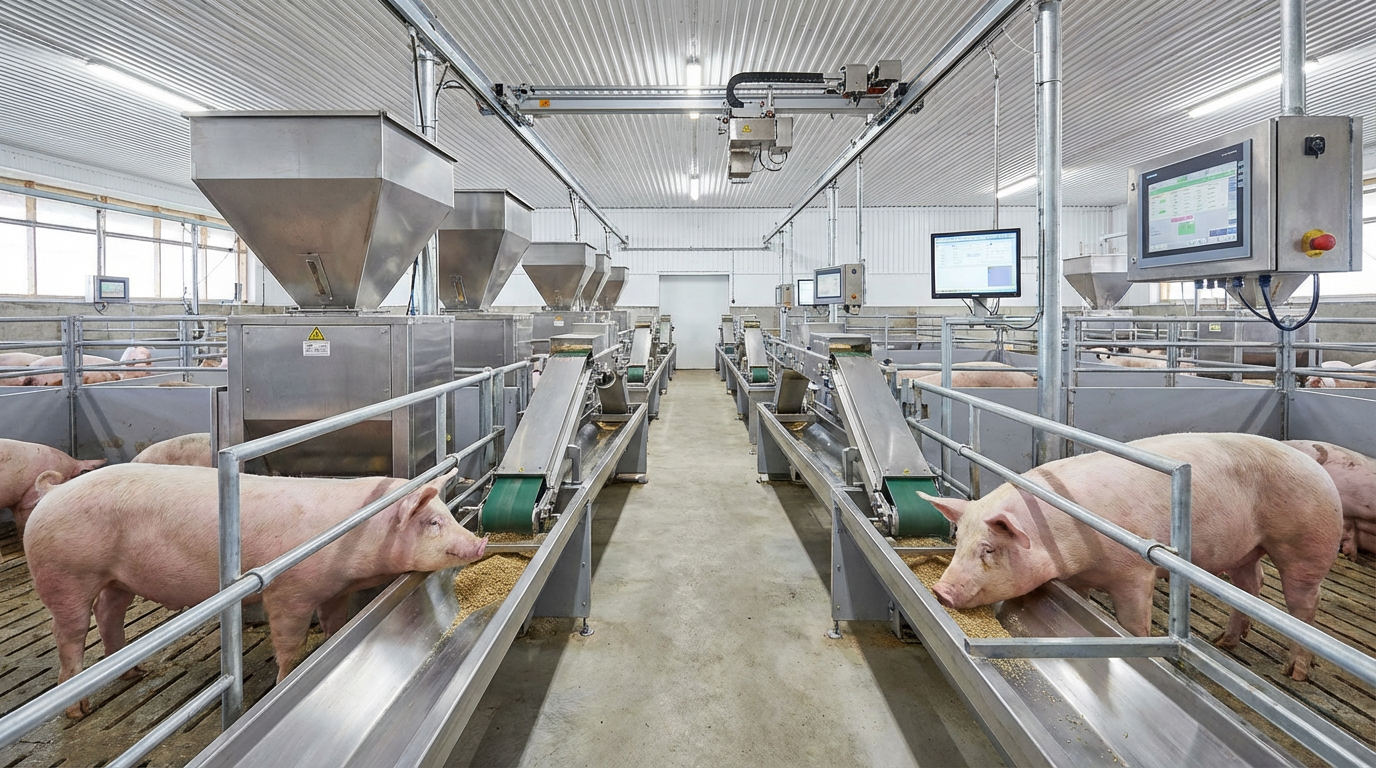
IoT Hardware (IoT): Sensor Technology and Environmental Control
The physical layer of the DayFarm platform consists of a robust network of IoT sensors and control hardware designed for precision environmental management.
1. Environmental Control and Automation
The IoT sensors continuously monitor critical environmental parameters within the barns, including:
- Temperature
- Humidity
- Ammonia and other gas concentrations
- Airflow and ventilation rates
This data feeds directly into the AI system, which then autonomously adjusts the farm’s climate control systems (ventilation fans, heaters, cooling pads) to maintain optimal conditions for the pigs. This level of automation is the primary driver behind TrackFarm’s claim of reducing labor costs by up to 99%.
2. Hardware Integration
The IoT hardware is designed for rugged farm environments and seamless integration. Key features include:
- Modular Design: Allowing for easy installation and scaling across different farm sizes and layouts.
- Wireless Connectivity: Utilizing low-power wide-area network (LPWAN) technologies or robust Wi-Fi mesh networks to ensure reliable data transmission across large facilities.
- Data Security: Implementing secure protocols to protect sensitive farm data from unauthorized access.
ColdChain Logistics: From Production to Consumption
TrackFarm’s vision extends beyond the farm gate, integrating a ColdChain solution to ensure the quality and safety of the product from slaughter to the consumer. This component addresses the critical need for transparency and traceability in the food supply chain.
The ColdChain pillar focuses on maintaining optimal temperature and handling conditions during transport and storage, using IoT-enabled tracking devices to log and verify compliance with food safety standards. This complete vertical integration is a key differentiator, moving TrackFarm from a pure farm management solution to a full-stack food technology provider.
Technical Specifications and Operational Metrics
The efficacy of the DayFarm platform is demonstrated through its operational scale and the precision of its data models.
AI Monitoring System Architecture
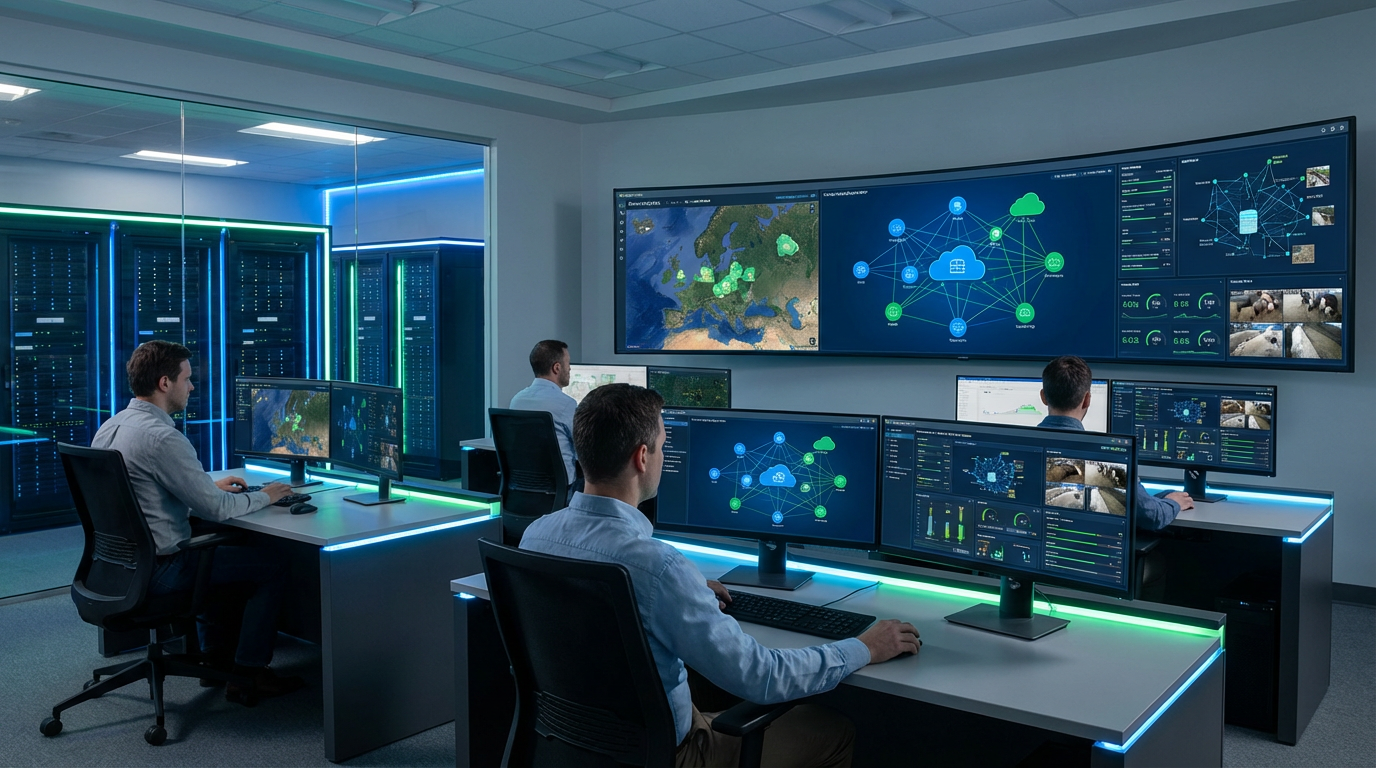
The system operates on a closed-loop feedback mechanism:
- Data Acquisition: Continuous stream of visual, thermal, and environmental data from IoT sensors and AI cameras.
- Edge Processing: Initial data filtering and pre-processing may occur at the edge (on-device) to reduce latency and bandwidth requirements.
- Cloud/Server Processing: Deep learning models run on centralized servers (or cloud infrastructure) to perform complex analysis, including growth prediction and anomaly detection.
- Actionable Output: Real-time alerts and automated control signals are sent back to the farm’s hardware systems and the farm manager’s dashboard.
| Metric | Specification | Technical Significance |
|---|---|---|
| Data Model Size | 7,850+ individual pig models | High accuracy in individual identification and behavioral tracking. |
| Monitoring Density | 1 camera per 132㎡ | Ensures comprehensive, non-obtrusive monitoring of all animals. |
| Labor Reduction | Up to 99% | Achieved through full automation of environmental control and monitoring tasks. |
| Operational Scale | R&D Farm (2,000+ pigs), Vietnam Farm (3,000+ pigs) | Demonstrates scalability and robustness in diverse climates. |
| Technology Focus | Deep Learning, Thermal Imaging | Enables predictive health management and early disease intervention. |
Data Acquisition and Model Training
The foundation of TrackFarm’s competitive advantage is its proprietary dataset, built from its R&D farm in Gangwon-do Hoengseong, Korea, and its operational farm in Ho Chi Minh, Dong Nai, Vietnam. The collection of data from diverse geographical and climatic conditions (Korea’s temperate climate vs. Vietnam’s tropical climate) is crucial for training AI models that are robust and generalizable across different global markets.
The company’s partnerships with over 10 farm partners and academic institutions like Seoul National University and Korea University facilitate continuous data collection and model refinement, ensuring the AI remains state-of-the-art in detecting new disease strains or optimizing for new breeds.

Market Analysis and Strategic Expansion
TrackFarm’s market strategy is characterized by a dual focus on established and emerging markets, underpinned by significant governmental and institutional validation.
The Vietnam Market Opportunity
Vietnam represents a critical strategic target for TrackFarm, given its status as the 3rd largest pig market globally, with a massive population of over 28 million pigs. The market structure, however, is highly fragmented, with over 20,000 small farms. This fragmentation presents both a challenge and a massive opportunity.
| Vietnam Pig Market Data | Value | Implication for TrackFarm |
|---|---|---|
| Global Rank | 3rd largest | High volume market with significant growth potential. |
| Total Pig Population | 28M+ | Large addressable market for smart farming solutions. |
| Farm Structure | 20,000+ small farms | Need for scalable, cost-effective solutions suitable for small-to-medium enterprises. |
| Key Partners | CJ VINA AGRI, VETTECH, INTRACO | Strong local partnerships for distribution, integration, and market penetration. |
The high density of small farms means that solutions must be easily deployable and provide a clear, immediate return on investment (ROI). TrackFarm’s system, which drastically cuts labor and reduces mortality rates through predictive disease prevention, is perfectly positioned to address the primary pain points of these farmers.
Global Ambitions: CES and TIPS
TrackFarm’s global ambition is evidenced by its participation in CES 2024/2025 and its selection for the prestigious TIPS program in 2023.
- TIPS (Tech Incubator Program for Startup): Selection for this highly competitive Korean government program validates the technological innovation and market potential of TrackFarm’s solution, providing crucial funding and R&D support.
- CES: Presence at the Consumer Electronics Show (CES) positions TrackFarm as a global technology player, facilitating partnerships and market entry into regions like the USA and the broader Southeast Asia market.
The company’s headquarters in Gyeonggi-do Uiwang-si and its R&D base in Hoengseong, coupled with its operational farm in Dong Nai, Vietnam, establish a strong operational footprint for regional and international expansion.
Economic Impact and Revenue Model
The economic model of TrackFarm is designed to generate recurring revenue while offering a compelling ROI for farm operators.
Cost Reduction and ROI
The primary economic benefit for farmers is the dramatic reduction in operational expenditure, driven by the 99% labor cost reduction through automation. Furthermore, the predictive disease prevention capabilities significantly lower mortality rates and reduce veterinary costs, leading to higher yields and improved feed conversion ratios.
The Subscription Model
TrackFarm employs a flexible, per-pig revenue model that aligns its success directly with the farmer’s production volume.
| Revenue Stream | Price Point (Per Pig/Year) | Description |
|---|---|---|
| HW/SW Subscription | $300 | Recurring fee for the use of the IoT hardware and AI software platform. |
| Breeding Services | $330 | Revenue from providing optimized breeding stock, likely utilizing data-driven selection. |
| Processing/Logistics | $100 | Fee associated with the ColdChain and processing integration services. |
This model, with a potential total revenue of $730 per pig per year across all services, provides a stable, scalable financial foundation for TrackFarm while offering farmers a clear path to profitability through efficiency gains. The subscription nature of the HW/SW component ensures a predictable, high-margin revenue stream.
Conclusion: The Future of Sustainable Livestock
TrackFarm is not merely digitizing the farm; it is fundamentally redefining the technical and economic model of livestock production. By integrating sophisticated deep learning models with robust IoT infrastructure and a full-stack ColdChain solution, the company addresses the most pressing challenges of modern agriculture—labor, disease, and sustainability.
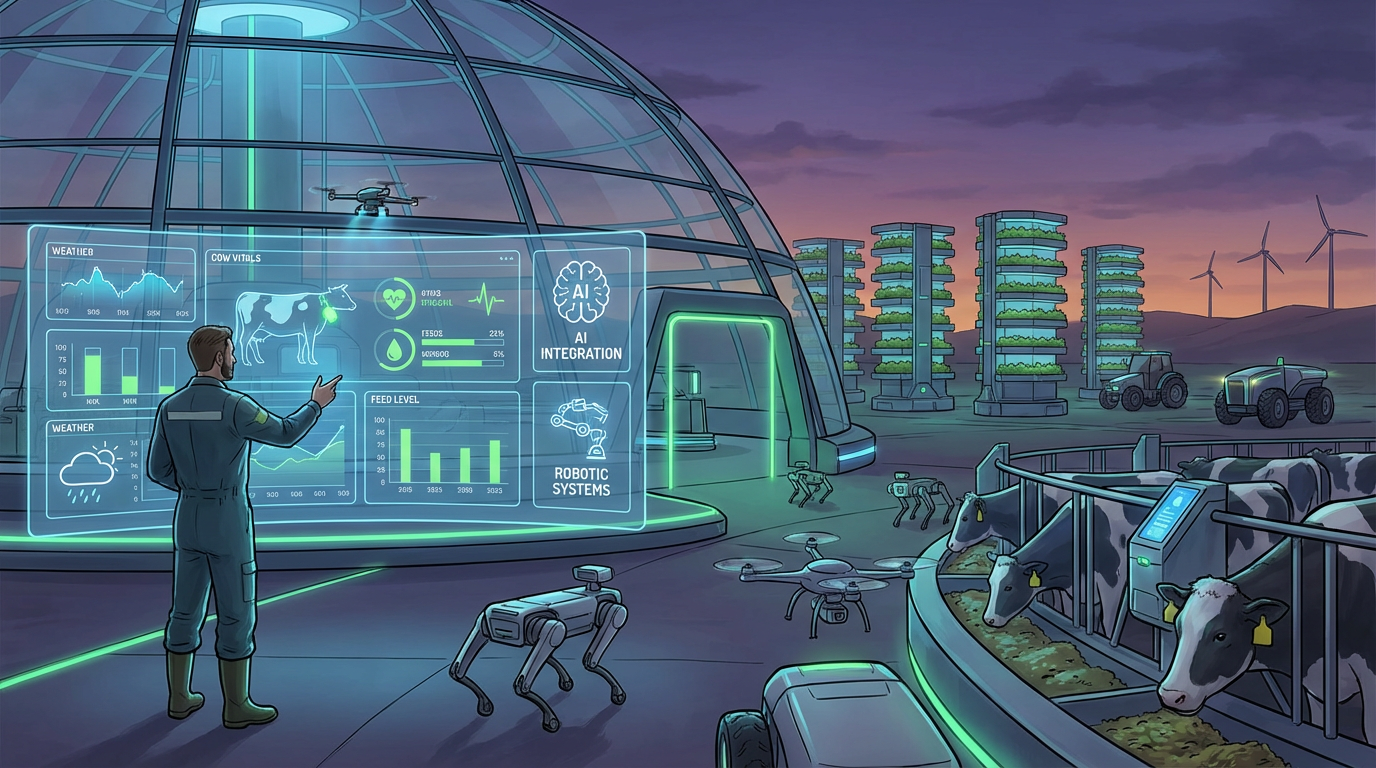
The technical specifications, including the 7,850+ pig model data and the 1 per 132㎡ monitoring density, demonstrate a commitment to precision agriculture that surpasses conventional methods. The strategic focus on high-growth markets like Vietnam, supported by strong institutional backing (TIPS) and global visibility (CES), positions TrackFarm as a key player in the future of sustainable food production. As the global population grows and the demand for ethically and efficiently produced protein increases, TrackFarm’s vision of a fully integrated, AI-powered “Farm of Tomorrow” offers a compelling blueprint for the industry’s next generation. The transition from manual, reactive farming to automated, predictive livestock management is inevitable, and TrackFarm is providing the technological infrastructure to lead that charge.